Jack Ruthven–St. John Ruthven rivalry
Young Captain Jack · The Son of a SoldierThe Jack Ruthven–St. John Ruthven rivalry is the novel’s most persistent domestic conflict: St. John Ruthven uses Jack Ruthven’s uncertain origins to deny his belonging, while Jack refuses to surrender either his dignity or his place within the family that adopted him. What begins as contempt for an alleged “nobody” becomes a struggle over Marion Ruthven, the Ruthven property, and the authority to define Jack’s identity. Their opposition gives personal form to the book’s larger contrast between moral worth and social rank.
Identity and Original Cause
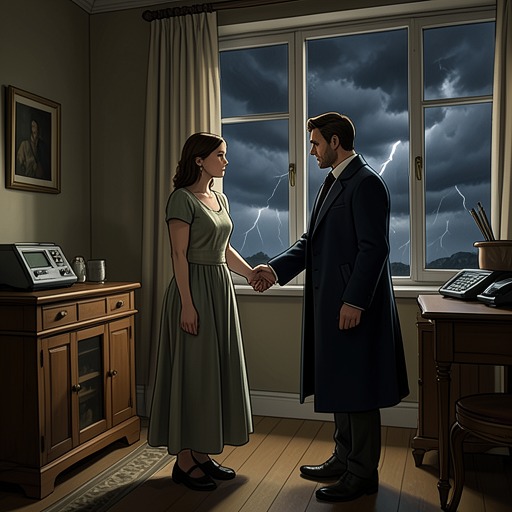
St. John is Jack’s cousin within the Ruthven family, but he does not treat Jack as a genuine relative. Darcy Gilbert describes St. John as a bully despite his fashionable appearance and reports that he is hostile to Jack. Jack already knows of that hostility, although he cannot initially explain it except through St. John’s attentions to Marion Ruthven. Jack regards Marion as too good for him, and his protectiveness toward her makes St. John’s courtship inseparable from the rivalry.
The deeper cause is St. John’s insistence that adoption does not confer true belonging. In conversation with Darcy, he has called Jack a nobody, claimed that Jack does not belong to the Ruthven family at all, and suggested that Jack will someday have to leave. The accusation strikes at the foundation of Jack’s self-understanding. Marion later confirms that Jack was adopted by her parents when he was three or four years old and is, in the eyes of the law, her real brother. The fact that Jack is legally part of the household does not soften St. John’s judgment; instead, St. John treats him as an intruder whose presence is both socially embarrassing and materially inconvenient.
Escalation into Open Conflict
Jack confronts St. John after learning that he has been calling him a nobody. St. John answers not with an explanation but with further contempt, calling Jack a low upstart and objecting to the possibility that Mrs. Ruthven might waste her plantation on him. Jack’s anger becomes physical when St. John refuses to withdraw the insult: riding close to him, Jack raises his little riding whip, demands that the word be taken back, and then strikes St. John across the shoulders and neck, leaving a livid red mark. St. John threatens to kill him, but Jack continues to demand a retraction. The scene converts an argument about status into a contest of courage, with St. John’s bluster met by Jack’s willingness to accept consequences.
The conflict remains active after the question of Jack’s parentage becomes public. St. John hears that Dr. Mackey, a Confederate surgeon, claims Jack as his son and uses the report as another reason to tell Jack to leave. He argues that Jack should not remain in what he calls a comfortable nest and should be forced to earn his own living. Jack answers that he is willing to work when called upon, but that St. John has no authority to decide his future. The exchange reveals the asymmetry between them: Jack defends work, legal standing, and personal responsibility, while St. John seeks the power to expel him.
Property, Marion, and Competing Claims
The rivalry is also an inheritance struggle. Jack openly identifies St. John’s practical aim: if Jack were removed, St. John believes that Mrs. Ruthven might leave the property to Marion Ruthven and to him. St. John replies that he has more right to it than Jack, relying on blood connection and conventional family hierarchy. Jack counters that Marion has the best claim and says that he hopes every dollar of the property goes to her. His response distinguishes his conduct from St. John’s. Although Jack’s own security is threatened, he does not demand the estate for himself; he places Marion’s interest above his own.
St. John’s attentions to Marion therefore carry a double meaning. Marion admits that he can be pleasant to her in a way he has never been to Jack, but his hostility toward Jack makes the courtship suspect. Jack’s objection is not simply jealousy or wounded pride. He believes Marion is being courted by a man who bullies relatives, seeks control of property, and regards Jack as an obstacle. Marion’s own anger when she learns what St. John has said shows that his behavior violates the family relationship he claims to defend.
The Identity Mystery Behind the Rivalry
St. John’s insults force Jack to ask where he came from, and Marion’s account links the answer to the wreck on Hemlock Bluff. Jack had been one of the passengers on the vessel that came ashore between ten and eleven years earlier. The woman who arrived with him died at the Ruthven house a few days later; her clothing and the child’s clothing were unmarked, and the only object in her pocket was an unmarked lace handkerchief. Mrs. Ruthven preserves that handkerchief and a ring from the woman’s finger. The ring once bore a marking, but it was too worn to read even after two jewelers examined it. When Jack sees the gold circlet, he recognizes that it resembles a wedding ring, though it supplies no immediate name.
The rivalry grows more dangerous as competing versions of Jack’s parentage appear. Dr. Mackey suddenly claims to be Jack’s father, a claim that St. John cites as though it could invalidate Jack’s place in the Ruthven home. Yet the claim is later overturned: Jack learns that he is not Dr. Mackey’s son but the son of Colonel Stanton. Colonel Stanton’s fevered references to a shipwreck, his appeal that his wife Laura and his son Jack be saved, the resemblance between the colonel and Jack, and the surviving clothing and jewelry together provide the proof. The truth changes Jack’s biological identity, but it does not vindicate St. John’s original contempt. Jack was not the nameless nobody St. John imagined, and his adopted relationship to the Ruthvens remains a real family bond.
Resolution and Narrative Significance
St. John’s treatment of Jack functions as a test of whether family is defined by blood, law, conduct, or affection. St. John relies on rank and descent while behaving in ways that make him unworthy of the authority he claims. Jack, despite his temper and the violence of the riding-whip incident, repeatedly acts from loyalty: he defends Marion, refuses to let St. John dictate his livelihood, and values her claim to the property above his own. Their conflict thus reverses the social judgment embedded in the word “upstart.” Jack may be uncertain of his origins, but his conduct demonstrates belonging more convincingly than St. John’s blood connection does.
The rivalry is never resolved by a reconciliation between the two men. Instead, it is eclipsed by the exposure of Jack’s true parentage and by the collapse of the wider criminal and military pressures surrounding him. After Jack returns home, a battle between Federal troops and the guerrillas kills many of the outlaws who had held him prisoner, including Pete Gendron. The outlaws’ camp yields stolen goods and the black tin box taken from the wreck of the Nautilus; its papers are returned to Colonel Stanton, who tells Jack that nothing now stands between them and their fortune. The recovered evidence settles the identity crisis that St. John exploited, leaving the rivalry as a record of the difference between inherited privilege and earned moral standing.